


- 8 Views
- 5 Min Read
- (0) Comment
How Tourism Supports Local Communities on Socotra
A Founder’s Perspective on Responsible Travel and Shared Value
By Abdullah Fadel
Founder & CEO, Socotra Phoenix Tours
When people think about tourism, they often focus on what the traveler receives—landscapes, experiences, memories, and adventure.
But after years of working in Socotra’s tourism sector, I have learned that the most important question is not only what visitors gain.
It is also what the island and its people gain in return.
For me, this is where tourism either becomes meaningful—or fails its purpose.
Socotra is not just a destination. It is a living community. And every journey here inevitably becomes part of that community’s story.
Tourism Begins With People, Not Places
Before Socotra became known internationally, most of its economy was rooted in traditional livelihoods—fishing, small-scale agriculture, and local trade.
When tourism began to develop, it did not replace these systems. Instead, it began to interact with them.
Over time, something important became clear to me:
Tourism does not exist independently on Socotra.
It only exists because of the people who live here.
Local guides, drivers, boat owners, cooks, campsite caretakers, and community hosts are not “supporting roles” in tourism.
They are the foundation of it.
Without them, there is no real experience to offer.
Direct Economic Impact: Where the Value Goes
One of the most visible benefits of tourism is direct income.
When travelers visit Socotra, their spending does not stay in one place—it spreads across multiple layers of the local economy.
It supports:
- Local transport providers and drivers
- Fishermen supplying fresh seafood
- Families running small guesthouses and camps
- Local guides who share knowledge of the land
- Community suppliers providing food and daily essentials
In many cases, tourism becomes one of the few consistent sources of income for families in remote areas of the island.
This is not abstract economics.
It is real livelihoods.
It is school fees, household stability, and new opportunities for younger generations.
Jobs That Stay on the Island
One of the most important aspects of tourism in Socotra is that it creates local employment that cannot be outsourced.
A guide cannot be replaced by someone overseas.
A driver cannot operate from another country.
A cook preparing traditional meals for travelers is part of the local culture itself.
This matters because it ensures that the value created by tourism remains on the island.
At Socotra Phoenix Tours, we have always prioritized working with local teams because we believe tourism should strengthen local capacity, not bypass it.
Cultural Exchange: A Two-Way Benefit
Tourism is often described as an economic activity, but on Socotra, it is also a cultural exchange.
Visitors come with curiosity about the island.
But they also leave an impact on the people they meet.
I have seen young locals become more confident speaking with international guests.
I have seen families take pride in sharing traditions they once considered ordinary.
And I have seen travelers leave with a deeper respect for simplicity, community life, and nature-based living.
This exchange is one of the most overlooked benefits of tourism.
It builds understanding on both sides.
Supporting Preservation Through Value
Socotra’s environment is its greatest asset.
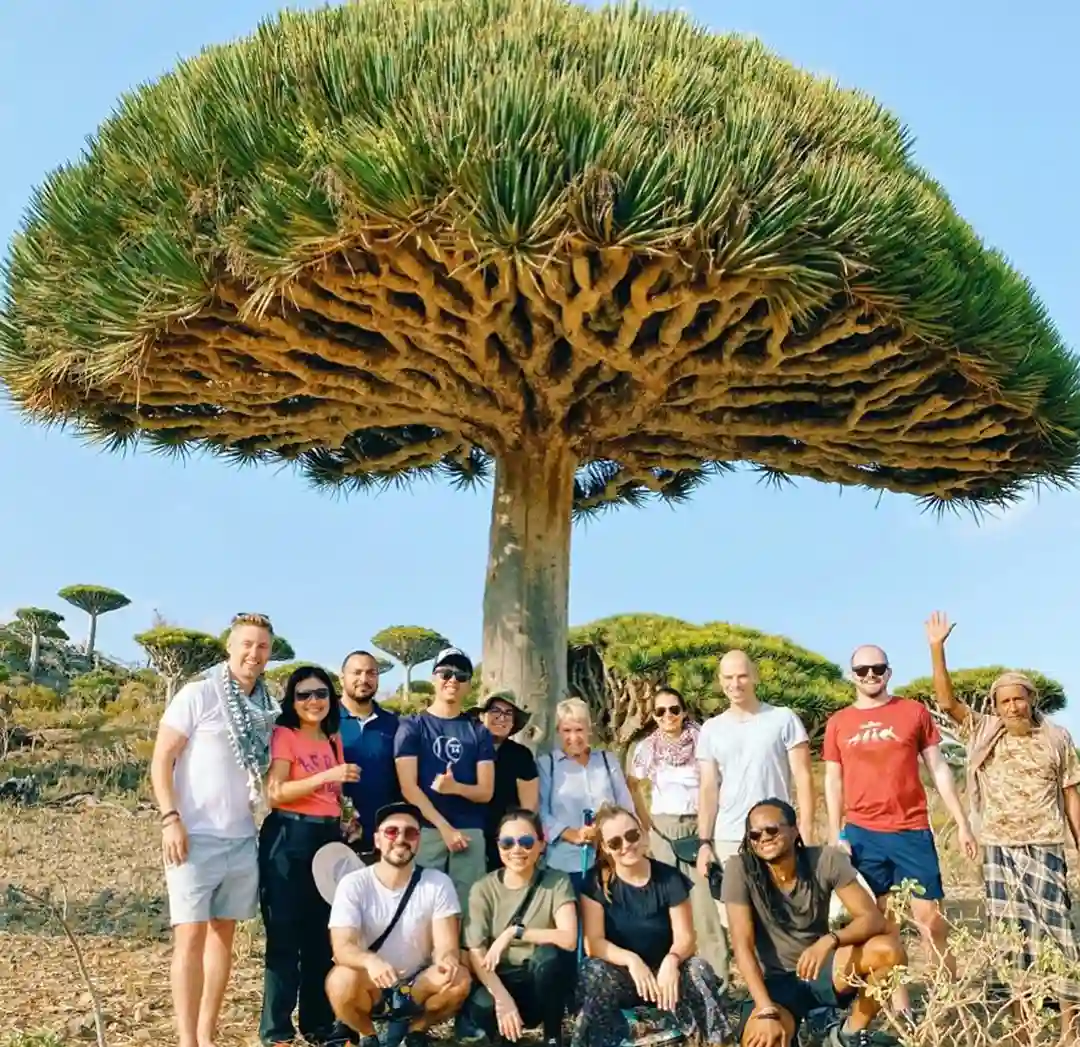
The Dragon’s Blood Trees, unique biodiversity, coral reefs, mountains, and desert landscapes are not just beautiful—they are irreplaceable.
Responsible tourism plays an important role in protecting them.
When tourism is managed carefully, it creates financial value for preservation.
It gives communities a reason to protect natural areas rather than overuse them.
It encourages awareness about sustainability.
And it helps shift the conversation from exploitation to stewardship.
However, this only works when tourism is done with intention.
Not volume.
Not speed.
But responsibility.
The Balance Between Growth and Protection
One of the most important challenges Socotra faces today is balance.
Tourism brings opportunity, but it also brings pressure.
More visitors can mean:
- More demand on natural resources
- More strain on infrastructure
- More exposure of fragile environments
This is why I often emphasize a simple principle:
Growth must never come at the cost of identity.
Socotra does not need mass tourism to succeed.
It needs thoughtful tourism.
The kind that respects limits, understands context, and prioritizes long-term sustainability over short-term gain.
Our Approach at Socotra Phoenix Tours
When I founded Socotra Phoenix Tours, I did not want to build a company that simply brings people to the island.
I wanted to build a company that contributes positively to it.
That means:
- Working with local communities as partners, not suppliers
- Hiring and training local guides and staff
- Supporting small businesses across the island
- Encouraging environmentally responsible travel practices
- Designing itineraries that respect natural carrying capacity
We view every tour not only as a visitor experience—but as a contribution to a larger ecosystem.
A Shared Future
Tourism on Socotra is still developing.
This is both a responsibility and an opportunity.
We have the chance to shape it carefully from the beginning, before it becomes something uncontrollable.
If done correctly, tourism can become one of the strongest tools for:
- Economic resilience
- Cultural preservation
- Environmental protection
- Global awareness of Socotra’s uniqueness
But this requires cooperation between travelers, local communities, and tour operators.
No single group can do it alone.
Final Reflection
When I look at Socotra today, I do not only see a destination.
I see a relationship between people and place.
Tourism, at its best, strengthens that relationship rather than weakens it.
It creates value that is shared, not extracted.
And it ensures that the beauty of Socotra is not only experienced—but also protected.
As we continue to welcome travelers to this island, my hope is simple:
That every journey contributes something meaningful back to the land and the people who make it possible.
Because in the end, the true success of tourism is not measured by how many people visit.
It is measured by how well a place continues to thrive because they did.
Abdullah Fadel
Founder & CEO
Socotra Phoenix Tours
“Tourism is not just about visiting places. It is about strengthening the people and places that make those journeys possible.”


Leave a comment: